
Learning that Miles did not, in fact, sprout up all by himself under a North Carolina cabbage leaf, but had a relative of likely the same generation gave me a new perspective on the problem of his mysterious origins. I have a new working theory. In fact, a theory may be all that I ever have! But it’s a pretty good story. Hear me out…
The early Virginia connection
Per the Vestry Book of the Upper Parish of Nansemond County, in 1785 Elisha Darden, a vestryman or church officer, was allotted 19 shillings for “sundries furnished to Sarah Bembra.” Sarah was most likely an adult pauper, perhaps a widow. Elisha Darden occupied several roles at Holy Neck chapel, located in present-day Holland, now part of the city of Suffolk, Virginia. The “neck” that the chapel was located on was in the wetlands that feed into the Great Dismal Swamp and very near the border with North Carolina. This area was home to many enslaved and free African-Americans who worked in the swamps.

Nansemond is a “burned county,” meaning that many records have been destroyed. In fact, there are no census records available for 1790, 1800, or 1810, or court records which could have been even more useful (sob!) But, in 1820, Sally Bembry pops up on the census, a head of household aged 45+, with another woman, a likely daughter, aged 26-44 living with her. Sally was a very common nickname for Sarah, and given the extreme rarity of the Bembry name, she is almost certainly the Sarah “Bembra” mentioned in the vestry book decades earlier.
(Note that in the highly phonetic spelling of the day, “Bembra” could be a version of “Bembray,” which appears as Miles’ surname several times in account books at David Clark’s mercantile later on, and is also the spelling used by Needham Bryan in his 1797 will, below.)
Some historical context
Interestingly, Sally is listed as white, but is found in a neighborhood with many “free negroes.” Nansemond’s free black community had a long history going back to early colonial times. It is a fascinating rabbit hole to go down once you start reading about it! But there are a couple of historical markers that I think are relevant to the Bembry timeline.
By the late 18th century, white people in Virginia started freaking out about the growth of the free black community, in particular the number of mixed-heritage people who were being treated as white. So, in 1785, the “mulatto law” was passed. Anyone with a black grandparent would be considered “mulatto” and for all legal purposes, black. Not the same as enslaved, because that depended on the legal status of the mother. These were people whose mothers, whether white or black, were free. But certainly with far fewer rights than white people, and subject to surveillance in the form of the new free negro registry and other racist laws.
Because of this law, large numbers free blacks and “mulattoes” migrated southward to eastern North Carolina, including to Martin County. North Carolina at that time had much less restrictive race laws and customs than Virginia did, and there was already a large and often prosperous free black community in the eastern counties that was relatively well tolerated by the white citizenry.
Back to our story
I have absolutely no idea where Sarah “Sally” Bembry came from. My guess is that she was either an immigrant indentured servant herself, or was the daughter of one. (There was a John “Bemberry” who arrived in nearby York County, Virginia in 1646 as part of a headright grant, but that is all I know about any earlier Bembrys.) Not only does the record loss in Nansemond County complicate the situation, but a woman with no property of her own left almost no trace in the documents of the day. I may never learn anything else about her. But here is my theory, based on the little bit of evidence that I have, along with the historical timeline.
Sarah Bembry was white, but unmarried. She may have remained that way because she could not legally marry her partner. In the mixed community in which she lived, that may well have been because her partner was not white. Therefore, she would have been in a common-law type of relationship, but kept her maiden name.
Sarah being legally single would explain why there are no male Bembrys who might be her husband found anywhere in the few surviving records from late 18th and early 19th century Nansemond County, mainly tax lists from 1783-1785. A man with no property might still be listed, as he was eligible for militia service. But there was no reason to count a woman with no property to be taxed on these lists. And if she was in the household of a free black (or biracial) male with a different last name, she would likewise not be counted at all, or she would just be a checkmark on the census form.
A DNA note here. My father and I, and several cousins along his Bembry line, show a small amount of African ancestry that points to an African-born ancestor some time in the 18th century. My father has also done his YDNA (direct paternal line) and it is European, pointing to an origin in Great Britain or Ireland. So, Sarah’s partner must have had a white father. A distant cousin who appears to descend from that father (and whose historical family comes from the same area as my ancestors) is working on this puzzle from a YDNA perspective. If he is able to work out the solution, I’ll be sure and write about that on this blog.
In this scenario, Sarah had children with her partner, and their children could potentially “pass” for white. Those children took her surname, as was the custom and law at that time. Miles Bembry was one of these children, and Henry Bembry was his (likely younger) brother. Born about 1766, Miles would have been about 19 when the “mulatto law” was passed in 1785. He decided that he would rather not be classified as a “mulatto” and left for North Carolina, along with many others who came to the same conclusion.
Migration to North Carolina
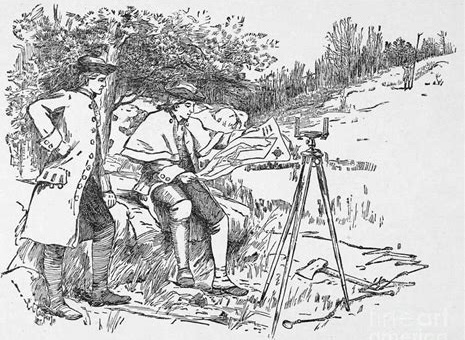
The first mention of Miles himself in records is in 1788, in Martin County, when he was a chain bearer for Joseph Cooper, a farmer and surveyor who is also his next door neighbor on the 1790 census. Chain bearers had to be able-bodied, strong people in order to carry the heavy lengths of surveying chain. They were often relatives or close neighbors to the surveyor. This Cooper family traces back to Nansemond County, as do several others in the neighborhood. Perhaps Miles, apparently a fit young man, was taken on as an apprentice or farm laborer by Joseph Cooper or one of these other Nansemond families and that is how he made his way to North Carolina.
By 1790, Miles was counted as white on the North Carolina census, and had just married Nancy Ann Bryan (AKA Ann Bryan), the daughter of a well-off local planter, Needham Bryan. It is possible that Miles was working for her father and that is how they met. In 1797, Ann “Bembray” inherited 100 acres, “the plantation where she now lives,” and an enslaved woman, Hannah, “now in her possession,” from her father. It seems that Miles “married up,” economically speaking, a pattern that would continue through the next generation of Bembrys.
Interestingly, Ann’s tract is also described as being the land “where James Bellflower formerly lived.” James was a likely son of the Reverend William Balfour or Balflour of Upper Parish, Nansemond, where Sarah Bembry lived. Miles continued to live near and conduct business with James Bellflower’s family for the next couple of decades. It is possible that there was some kinship there, but I have yet to discover it.
As to Henry Bembry, the best explanation I can come up for his absence from records is that much of his adulthood fell into the record gap in Nansemond County (1790-1820). That does not explain why he doesn’t show up somewhere on the 1820 and 1830 censuses, however. My best guess is that he lived in another man’s household. He could have been living with a wife’s family, or boarding as a farm laborer. In either case, he would not be named on those censuses. He probably would have shown up on the 1815 tax list in Nansemond County, however. His absence leads me to believe that he had already moved to North Carolina by then. Who knows, maybe someday he will pop up again!
The Bembrys move up in the world
If Miles was biracial, he apparently had no problem with slavery. (In fact, there were many free black and biracial overseers in coastal North Carolina during that period.) He appears to have been employed as a plantation overseer by Colonel William Williams, one of the wealthiest planters in the area. Later, he worked as an overseer for David McKenzie Clark, a very wealthy planter and merchant. Meanwhile, he acquired quite a lot of land and property, including up to 20 slaves. His sons were educated with the planters’ sons, and he himself went from unable to sign his name to at least being able to sign documents.

The Bembrys clearly climbed the local social ladder. Two of Miles’ sons, William and Kenneth, married into the prominent Mayo family, and another, John, into the well-off Wiggins family. (Kenneth apparently maintained a second family with a free black woman in Tallahassee.) My own ancestor, Thomas, aimed a little lower, marrying Martha “Patsy” Dickens when she was just a young teenager (probably a shotgun wedding). Nevertheless, she did inherit some property from her wealthy grandfather, Nathan Harris. All four of the Bembry brothers were slaveholders.
As racial lines became more firmly drawn and laws tightened up throughout the South over the next decades, there is some evidence that there were limits to society’s acceptance of a possibly “mulatto” plantation overseer and his children. As I’ve documented previously, when the wealthiest of the lot, Kenneth Bembry, ran for the Florida legislature, his opponent practically accused him of being “uppity.” And when John Bembry was accused of murder in Florida, the wanted notice could certainly fit a person of mixed heritage, both in the physical description, “dark skin and eyes, with a heavy down look, and a very dark and heavy beard” and the use of the term “a down look” that often appears in notices for escaped slaves. Was this code?
North Carolina goes the way of Virginia
By 1830, North Carolina whites were freaking out. Starting in that year, a series of laws were passed that restricted the rights of free people of color. It began with a ban on teaching literacy to black people, progressed to depriving them of the right to assembly and to bear arms, and in 1835, free black men were completely disenfranchised. Meanwhile, a series of court cases effectively defined “black” as anyone with one black great-grandparent. If my theory about Miles’ origin is correct (and if anyone had bothered to enforce the laws in his case) he and his entire family, including his children and grandchildren, would both be defined as black and deprived of full citizenship under the more restrictive regime that evolved during this decade.
Well, the Bembrys did not wait around to find out. Miles started selling off his land in 1830, in preparation for a move to Georgia that occurred in 1831 or early 1832. Thomas Bembry moved with him, while his other three sons had already sold off their lands and departed for Georgia and Florida in 1829 and 1830. Miles was around 65 years old at the time of this move, and I can say from my years of genealogical research, there were not many people in those times who pulled up stakes and moved long distances at that age. It is possible that he simply wanted to be near his family, but I don’t think the timing can be ignored. Miles Bembry’s story certainly looks like he was a person of color who was “passing white” and knew when to get out of town.
Myth versus working theory
On a related note, as I mentioned earlier, Miles had a long working association with David McKenzie Clark and his relatives. I used to think that he might be related to them, in part because a long-held myth about the Bembry family origins so closely resembled the actual origin story of the McKenzies, and his sons’ names mirror those of that family. In fact, the family patriarch, the Reverend John McKenzie, held slaves named Sarah and Miles at his death in 1775 which really made me wonder! But I think this is probably just a coincidence. It is possible that there is some family connection there that I haven’t yet discovered, however, there is no DNA or any other kind of evidence that we actually descend from any McKenzies.
I now believe that Miles and/or his sons deliberately adopted the McKenzie story as their own once they moved to Georgia. Coming from an “English ship’s captain and his Irish wife” just sounded better than coming out of the hardscrabble community of the Great Dismal Swamp. It neatly skirted the racial issue as well. People who “passed white” had good reasons to obscure their origins in the society of the time, after all. It’s not at all unusual for such families to be difficult to research and document. Unfortunately, the invented Bembry story was included in a DAR collection of Pulaski County, Georgia biographies nearly a hundred years ago. Despite the total lack of evidence for this “Captain John Miles Bembry,” it continues to replicate in online family trees. Argh.
You might say that the narrative I have just presented is also just a story. But the narrative does fit the known facts. I’m calling it a solid working theory. It’s also a pretty good story!

